• úvod
  • témata
  • události
  • tržiště
  • diskuze
  • nástěnka
  • přihlásit
    registrace
    ztracené heslo?
    TUHOKlimaticka zmena / Destroying the Future Is the Most Cost-Effective
    TUHO
    TUHO --- ---
    TADEAS:
    PER2: tadeas ma pravdu, globalni teplota je uplne neco jjnyho nez lokalni mereni a rekonstrukce. michani tehle dvou veci je castej trik dezinfo sceny mimochodem. logicky globalni teplota mandaleko vetsi setrvacnost. a zmena jeden stupen globalni teploty tak pak znamena daleko vetsi variability v lokalnich manifestacich (dnes napriklad zmena 1 stupen v globalu = 3-4 stupne na aljasce a 2 stupne u nas)...
    TADEAS
    TADEAS --- ---
    paul maidowski strikes again .)

    Paul Maidowski
    https://twitter.com/_ppmv/status/1388955156625215497?s=19

    I don’t mean to always criticize but am genuinely puzzled: do people think ahead? IF we assume Germany has a carbon budget (= a very rosy assumption), we may be able to stretch it from from 6.7 years to maybe 7-9 years. Great. So what’s the plan for subsequent years to centuries?
    TADEAS
    TADEAS --- ---
    Sea Level Rise Driven by Crucial Ice Sheet Could Be 30% Higher
    https://earther.gizmodo.com/sea-level-rise-driven-by-a-crucial-ice-sheet-could-be-3-1846798679/

    New research says that the total collapse of a crucial ice sheet in Antarctica could mean that sea levels would rise an additional 30% more than scientists currently predict

    The study, published Friday in Science Advances, deals with how the melting ice on the West Antarctic ice sheet will impact the Earth’s crust below. Current predictions say that the ice sheet will increase sea level rise by 10.8 feet (3.3 meters) if it melts fully over the next 1,000 years, but taking the bedrock into effect, this study found, could add a full 3.3 feet (1 meter) to current predictions. What’s more, the models the researchers used show that sea level rise predictions from the ice sheet by the end of this century could actually be 20% higher because of this bedrock effect.

    Rapid postglacial rebound amplifies global sea level rise following West Antarctic Ice Sheet collapse | Science Advances
    https://advances.sciencemag.org/content/7/18/eabf7787
    TADEAS
    TADEAS --- ---
    86 policy options for the EU to reduce tropical deforestation, collected from stakeholders in civil society, indigenous groups, industry, consumers & more, and assessed for political feasibility and effectiveness by @SimonBager et al.
    @EU_ENV @Europarl_EN https://t.co/dyA9cubVen

    https://twitter.com/KA_Nicholas/status/1376867114913513477/photo/1
    https://t.co/G5PXbVpcQw
    TADEAS
    TADEAS --- ---
    TADEAS: tipping more

    Amazon biome hurtles toward death spiral as deforestation jumps in 2020 | Article [AMP] | Reuters
    https://mobile.reuters.com/article/amp/idUSKBN29W20T

    An area the size of Israel was deforested in the Amazon biome last year as destruction surged 21% in the region spanning nine countries that is home to the world's largest rainforest, according to the Amazon Conservation organization.

    At that accelerated rate, the Amazon rainforest will reach a tipping point in 10 to 20 years, after which it will enter a sustained death spiral as it dries out and turns into a savanna, said Carlos Nobre, an earth systems scientist at University of Sao Paulo.

    About 17%-18% of the biome has already been destroyed, and with 1% more cleared every three years, the tipping point of 20%-25% destruction is rapidly approaching, said Nobre, who is not affiliated with the Amazon Conservation organization.
    TADEAS
    TADEAS --- ---
    mozna bylo, rok stary

    Predicting the Future of Arctic Ice | News | National Centers for Environmental Information (NCEI)
    https://www.ncei.noaa.gov/news/arctic-ice-study

    a new paper in the journal Climate suggests that the Arctic may be essentially ice-free during summer within fifteen years.

    That projection, however, comes with a caveat. In the paper, https://www.mdpi.com/2225-1154/8/1/15scientists from the North Carolina Institute for Climate Studies (NCICS), NCEI, NOAA Pacific Marine Environmental Laboratory, and the University of Washington evaluate climate models by comparing their performance to satellite observations of rates of melting in recent years. The results indicate that there is room for improvement in sea-ice models—and that the ice may disappear even more quickly than current models suggest

    Climate | Free Full-Text | What Do Global Climate Models Tell Us about Future Arctic Sea Ice Coverage Changes?
    https://www.mdpi.com/2225-1154/8/1/15
    TADEAS
    TADEAS --- ---
    Icequakes indicate Antarctic glaciers on the move - Temblor.net
    https://temblor.net/earthquake-insights/icequakes-indicate-antarctic-glaciers-on-the-move-12717/

    For more than 30 years, research into glacial seismicity — the frequency of non-tectonic seismic events in ice — focused on Greenland, and with good reason. Greenland’s “icequakes,” as scientists call glacier-bound temblors, have been breaking records with increasing frequency, raising alarm about the implications of glacial melting and climate change.

    At the opposite pole, much of Antarctic seismicity also results from ice moving and breaking within the thick sheets that cover the continent. As a global phenomenon, icequakes suggest a larger correlation between climate change and ice mass, with icequakes potentially acting as indicators of overall glacial ice conditions — more icequakes, more melting. In an ongoing project, Bulgarian Academy of Sciences and Sofia University seismologist Gergana Georgieva and her colleagues, have been studying seismic activity within the Antarctic Perunika Glacier, located adjacent to the Bulgarian St. Kliment Ohridski Base on Livingston Island

    CO Meeting Organizer EGU21
    https://meetingorganizer.copernicus.org/EGU21/EGU21-7830.html
    KEB
    KEB --- ---
    TADEAS
    TADEAS --- ---
    Teče nám do bot, vidíme to už i u nás, říká český vědec z tající Arktidy - Seznam Zprávy
    https://www.seznamzpravy.cz/clanek/tece-nam-do-bot-vidime-to-uz-i-u-nas-rika-cesky-vedec-z-tajici-arktidy-152457
    TADEAS
    TADEAS --- ---
    PER2: jsem reagoval na tvoje "s tim oteplenim o dva stupne, hmm hmm, treba pred 140k lety? otepleni o osm stupnu a o tri stupne vic nez dnes..." - jakoze globalni teplota se vychylila o osm nebo o tri stupne? mozna by to v postupimi zaznamenali :D
    SHEFIK
    SHEFIK --- ---
    Krasny

    Panenská příroda pokrývá už jen tři procenta povrchu. Rychlý úbytek vědce překvapil - Aktuálně.cz
    https://zpravy.aktualne.cz/zahranici/panenska-priroda-pokryva-uz-jen-tri-procenta-povrchu-rychly/r~6280e1e4ac4411eb8335ac1f6b220ee8/

    Předchozí data založená na satelitních snímcích uváděla, že "čistou" přírodu najdeme na 20 až 40 procentech povrchu planety. Nová studie, která použila mapy ukazující poškození životního prostředí a úbytek zvířat, však toto číslo upravuje na pouhá tři procenta.
    PER2
    PER2 --- ---
    TADEAS: "globalni teplota je neco jinyho nez data z jednotlivejch lokalit"
    doted jsem si myslel, ze presne tak se globalni teplota urcuje, dataset teplot z ruznych lokaci..
    tak tady mas i jizni pol ;)

    TADEAS
    TADEAS --- ---
    PER2: dobre, je to nejaka variabilita, ale ta globalni teplota je neco jinyho nez data z jednotlivejch lokalit. cr se uz taky oteplila vic nez o 2, globalni zmena tam ale zatim nedosla.
    PER2
    PER2 --- ---
    TADEAS: tohle je tusim mix nekolika vrtu gisp, grip, camp century, dye 3 a pravdepodobne dalsi, je to z ruznych mist gronska

    "Greenland is just one location and temperature variations seen in ice core records may not be characteristic of global temperatures. However, global proxy reconstructions have tended to show similar patterns, with current temperatures lower than the early Holocene maximum.
    Unless greenhouse gas emissions cease in the near future, warming will continue and, by the middle of the 21st century, Greenland – and the world as a whole – will likely experience temperatures that are unprecedented at least since the last interglacial period 125,000 years ago."

    also
    "In the last million years the Earth’s climate has alternated between ice ages lasting about 100,000 years and interglacial periods of 10,000 to 15,000 years. The new results from the NEEM ice core drilling project in northwest Greenland, led by the Niels Bohr Institute at the University of Copenhagen show that the climate in Greenland was around 8 degrees C warmer than today during the last interglacial period, the Eemian period, 130,000 to 115,000 years ago."

    no a pak tu mame treba sedimenty z baffin island lake
    "An analysis of sediment cores indicates that biological and chemical changes occurring at a remote Arctic lake are unprecedented over the past 200,000 years and likely are the result of human-caused climate change, according to a new study led by the University of Colorado at Boulder. "

    tady sem nasel nejakou starsi mapku par vrtu
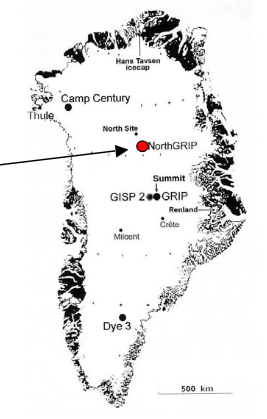
    KEB
    KEB --- ---
    Katastrofa, budeme muset zavřít, děsí se teplárny. Povolenky strmě zdražily - Seznam Zprávy
    https://www.seznamzpravy.cz/clanek/katastrofa-budeme-muset-zavrit-desi-se-teplarny-povolenky-strme-zdrazily-153168
    TADEAS
    TADEAS --- ---
    PER2: ten obrazek srovnava globalni teplotu s nejakou/nejakejma gronskejma lokalitama?
    DZODZO
    DZODZO --- ---
    Na tema sucho, aj ked tento rok zatial prsi rozumne

    https://www.intersucho.cz/userfiles/file/2021_04_Letokruhy%201.pdf
    PER2
    PER2 --- ---
    TADEAS: k tomuhle videu, s tim oteplenim o dva stupne, hmm hmm, treba pred 140k lety? otepleni o osm stupnu a o tri stupne vic nez dnes...
    je pekny se podivat jak je holocen relativne klidny obdobi, ikdyz byly nejaky maly doby ledovy a podobny srandy, kdyz to clovek srovna s tim, co se tu delo predtim, z toho bysme tu nestihali kopat masovy hroby

    TADEAS
    TADEAS --- ---
    Ten Years to Transform Humanity - A Whole Earth Perspective - Dr. Johan Rockström, Scientist
    https://youtu.be/M-iPZIIpCUE


    uz to tu asi bylo, ale rekapituluje ze ipcc behem par mesicu prijde s tim, ze zdvojnasobeni koncentraci co2 (kam se dostanem v soucasnym trenu za 15-30 let) znamena otepleni o 2.3-4.5 stupne, tzn definitivne z toho vypadla ta nizsi cast rozsahu
    TADEAS
    TADEAS --- ---
    DOCUMENTARY | THE DECADE OF ACTION
    https://www.thedecadeofaction.com/

    THE DECADE OF ACTION / LETTER TO THE GREAT-GRANDCHILDREN / Johan Rockström
    https://youtu.be/XGozZ3LuicI
    DZODZO
    DZODZO --- ---
    zaujimava studia, ze toho plastu v oceanoch zas tak moc nie je (co do objemu)

    Why 99% of ocean plastic pollution is "missing"
    https://www.youtube.com/watch?v=fsjvwQclGLo
    JIMIQ
    JIMIQ --- ---
    Jezis, tak si nakup taky :D
    SHEFIK
    SHEFIK --- ---
    XCHAOS: co me nejvic prekvapilo na celym tomhle tematu je ta pokrivena obhajoba od lidi co maj nakoupino.

    However, both Twitter CEO Jack Dorsey and Tesla CEO Elon Musk have claimed that the continued adoption of Bitcoin would incentivize the use of renewable energy like solar and wind.

    A to sem Muskovi doted fandil.
    XCHAOS
    XCHAOS --- ---
    Těžba bitcoinu v Číně už má stejně velkou uhlíkovou stopu jako celá Česká republika – Živě.cz
    https://www.zive.cz/clanky/tezba-bitcoinu-v-cine-uz-ma-stejne-velkou-uhlikovou-stopu-jako-cela-ceska-republika/sc-3-a-209443/default.aspx
    SHEFIK
    SHEFIK --- ---
    Kdyz jsme u lesu vs co2

    Pollen study shows forest regrowth began hundreds of years before arrival of Europeans in Amazonia
    https://phys.org/news/2021-04-pollen-forest-regrowth-began-hundreds.html
    YMLADRIS
    YMLADRIS --- ---
    TADEAS: Doplním, že Jakub zamouril na to psal, že česká žaloba používá podobnou argumentaci jako německá, tak jsou zvědaví
    TADEAS
    TADEAS --- ---
    Michal Berg
    https://facebook.com/story.php?story_fbid=10157767027066073&id=731291072

    Velká věc: Německý zákon o klimatu je částečně protiústavní, rozhodl německý ústavní soud. Německo bude muset zlepšit své emisní cíle pro období po roce 2031 na základě žaloby koalice klimatických aktivistů, mezi něž patří i Fridays for Future.

    "Zákony nevratně přesouvají vysokou zátěž spojenou se snižováním emisí na období po roce 2030," uvedl soud. Dále uvedl, že "napadená ustanovení skutečně porušují svobody stěžovatelů, z nichž někteří jsou ještě velmi mladí. Prakticky každá svoboda je těmito budoucími povinnostmi ke snižování emisí potenciálně dotčena, protože téměř všechny oblasti lidského života jsou stále spojeny s emisemi skleníkových plynů, a jsou tak ohroženy drastickými omezeními po roce 2030." De facto tak právo na ochranu klimatu zařadil mezi základní práva.

    Stížnost podala skupina devíti převážně mladých lidí. Podporuje je několik ekologických sdružení, například Friends of the Earth Germany (BUND) a Fridays for Future. Zákon kritizují s tím, že nedostatečně snižuje emise skleníkových plynů a tím porušuje jejich základní právo na budoucnost.

    Německý zákon o ochraně klimatu schválila vláda v roce 2019. Podle něj je Německo povinno do roku 2030 snížit emise skleníkových plynů o 55 % ve srovnání s úrovní z roku 1990. Rozhodnutím soudu také zřejmě bude muset být uspíšen konec spalování uhlí, který v tuto chvíli Německo plánuje na rok 2038. Vláda dostala termín do konce příštího roku, aby neústavní zákon upravila.

    Shodou okolností byla klimatický žaloba podána v minulém týdnu i v Česku.
    TADEAS
    TADEAS --- ---
    TADEAS: a jinak / sireji:

    Tending the Wild by M. Kat Anderson - Paperback - University of California Press
    https://www.ucpress.edu/book/9780520280434/tending-the-wild

    a

    Amazon.com: The Biggest Estate on Earth: How Aborigines Made Australia (9781743311325): Gammage, Bill: Books
    https://www.amazon.com/Biggest-Estate-Earth-Aborigines-Australia/dp/174331132X
    TADEAS
    TADEAS --- ---
    TADEAS: k Evrope pak krasnej text

    The Lost Forest Gardens of Europe
    https://www.shelterwoodforestfarm.com/blog/the-lost-forest-gardens-of-europe
    TADEAS
    TADEAS --- ---
    'Forest gardens’ show how Native land stewardship can outdo nature
    https://www.nationalgeographic.com/environment/article/forest-gardens-show-how-native-land-stewardship-can-outdo-nature

    For hundreds of years, Indigenous communities in what is now British Columbia cleared small patches amid dense conifer forest. They planted and tended food and medicine-bearing trees and plants—sometimes including species from hundreds of miles away—to yield a bounty of nuts, fruits, and berries. A wave of European disease devastated Indigenous communities in the late 1700s, and in the 1800s, colonizers displaced the Indigenous people and seized the land. The lush, diverse forest gardens were abandoned and forgotten.

    A few years ago, Chelsey Geralda Armstrong, an ethnobotanist at Simon Fraser University, was invited by First Nation elders to investigate why hazelnut trees were growing at abandoned village sites near the coast. The plants were far from their native habitat in the dry interior and seemingly lost among towering cedars and hemlocks. Armstrong began to suspect she was studying human-created ecosystems—and they were thriving, even with no one caring for them. She brought her suspicions to community elders, who confirmed them by sharing memories of ancestors cultivating edible and medicinal plants.

    Armstrong gathered colleagues to study these ancient gardens’ ecology. In a new paper published this week in the journal Ecology and Society, the team reports a striking finding: After more than a century on their own, Indigenous-created forest gardens of the Pacific Northwest support more pollinators, more seed-eating animals and more plant species than the supposedly “natural” conifer forests surrounding them.

    “When we look at forest gardens, they’re actually enhancing what nature does, making it much more resilient, much more biodiverse—and, oh yeah, they feed people too,” says Armstrong.

    The paper may be the first to quantify how Indigenous land stewardship can enhance what ecologists call functional diversity—a measure of how many goods an ecosystem provides. It joins a growing scientific literature revealing that Indigenous people—both historically and today—often outperform government agencies and conservation organizations at supporting biodiversity, sequestering carbon, and generating other ecological benefits on their land

    Ecology and Society: Historical Indigenous Land-Use Explains Plant Functional Trait Diversity
    https://www.ecologyandsociety.org/vol26/iss2/art6/
    Kliknutím sem můžete změnit nastavení reklam